Тестов проект, стартиран: 05.2026

Тестов проект, стартиран: 05.2026

Тестов проект, стартиран: 05.2026
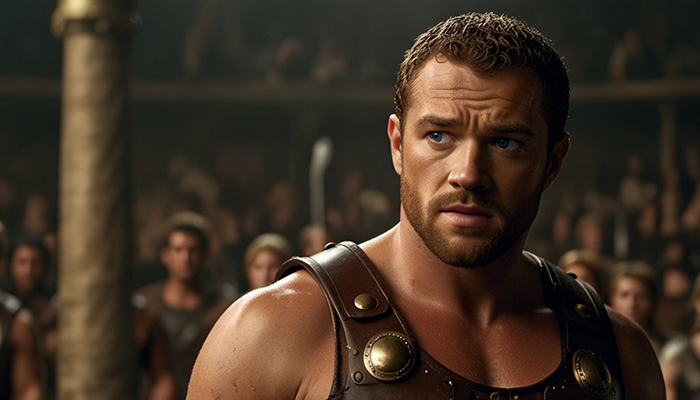
In the heart of ancient Greece, where gods and monsters walked the earth, one name stood above all… Hercules is the legendary hero of strength and valor.
Born from the union of Zeus, the king of the gods, and a mortal woman, Alcmene, Hercules was destined for greatness. But his birth was also cursed by Hera, Zeus’s wife, who despised the hero even before he took his first breath.
Then came the Hydra, a monstrous serpent with multiple heads that grew back as soon as they were severed.
From capturing the Golden Hind, a sacred deer of Artemis, to cleaning the massive stables of King Augeas in a single day, Hercules overcame each challenge with wit, courage, and unparalleled strength.
As a demigod, Hercules had the favor of the gods. Athena, the goddess of wisdom, often guided him, while Hermes, the swift messenger, aided him in his travels. But no favor was greater than the gift of immortality, which awaited him if he could complete his Labors.
One of the most daunting tasks was obtaining the golden apples from the Garden of the Hesperides, guarded by the hundred-headed dragon Ladon. With the help of the Titan Atlas, Hercules succeeded once again.
His final task, however, would take him to the land of the dead itself. Hercules was ordered to capture Cerberus, the three-headed guard dog of the Underworld. With only his strength and courage, Hercules descended into the Underworld, where he confronted the monstrous beast.
Victorious, he emerged from the depths with Cerberus in tow, proving that not even death could stand in his way.
But even legends are not without tragedy. Despite his countless victories, Hercules’ life ended in sorrow. Tricked by the centaur Nessus, his wife Deianira accidentally poisoned him with a blood-soaked tunic.
The pain was unbearable, and in his final moments, Hercules begged to be set free from his mortal suffering. He constructed a funeral pyre and, with his dying breath, set himself ablaze.
But this was not the end of his story. In recognition of his heroism, Zeus brought Hercules to Mount Olympus, granting him the gift of immortality. He ascended to the heavens, where he now lives among the gods.
Over the centuries, Hercules’ legend has endured. From ancient Greek myths to modern films and books, his story continues to inspire, representing the eternal struggle between strength, humanity, and redemption.
Hercules, the hero who defied gods, monsters, and fate itself, stands as a symbol of resilience, courage, and the enduring power of legend.
Throughout history, ancient civilizations have stunned the modern world with their technological achievements. Despite the leaps we’ve made in science and engineering, there are still ancient technologies that leave today’s experts scratching their heads. These artifacts and structures defy conventional understanding, hinting at forgotten knowledge and mysterious techniques.
In this article, we explore 15 incredible ancient technologies that scientists still can’t fully explain — each one a testament to the ingenuity and mystery of the distant past.

How were the massive limestone blocks, some weighing over 70 tons, transported and precisely positioned without modern machinery? Despite numerous theories, the exact methods remain an enigma.

This ancient metal, known for its strength, flexibility, and distinctive watery pattern, was used for making swords that could cut through lesser blades. Scientists have yet to perfectly replicate the original forging technique.

Roman structures like the Pantheon and aqueducts have stood for millennia. Modern concrete often degrades within decades. The secret formula for Roman concrete, especially its resilience in seawater, is still not fully understood.

Discovered in a Greek shipwreck, this 2,000-year-old device is often called the world’s first analog computer. It could predict astronomical positions, yet its complexity suggests technological capabilities far beyond what was previously assumed for its time.

These gigantic geoglyphs in Peru, best seen from the air, are a mystery. How did ancient people create such vast, perfectly proportioned designs without aerial perspective? Their purpose — ritual, astronomical, or otherwise — remains debated.

Standing for over 1,600 years without rusting, the Iron Pillar of Delhi showcases metallurgical skills that seem to defy what we know about ancient ironwork.

The massive stone walls of this Incan complex in Peru feature enormous rocks fitted together so precisely that not even a knife blade can slip between them — without mortar. How the Incas managed this feat remains a mystery.

Hundreds of perfectly round stone spheres, some weighing up to 16 tons, dot the Diquís Delta. Their purpose, method of creation, and cultural significance are still largely unknown.

An incendiary weapon used by the Byzantine Empire, Greek Fire could continue burning even on water. The exact chemical composition of this terrifying weapon has been lost to history.

Part of the ancient city of Tiwanaku in Bolivia, Puma Punku features massive stone blocks with intricate cuts and precision that seem implausible without advanced tools — yet it dates back over 1,400 years.

In China, these massive, hand-carved underground structures, created over 2,000 years ago, show no signs of how they were excavated or why. The scale and precision are astonishing.

The ruins of Baalbek in Lebanon house some of the largest stone blocks ever used by humans, some weighing up to 1,200 tons. How ancient builders moved and placed these stones remains a topic of intense debate.

This remote area of Siberia contains strange metallic structures and legends of devastating energy bursts. Some suggest remnants of ancient technology, though definitive explanations are elusive.

Discovered in Iraq, this 2,000-year-old artifact resembles a primitive battery. Could ancient civilizations have understood and harnessed electricity? The theory remains controversial but fascinating.

Described in ancient Sanskrit texts, Vimanas were flying machines said to soar across the skies. While some dismiss them as mythological, others wonder if they hint at forgotten technological prowess.
These ancient technologies challenge our understanding of history. They remind us that human ingenuity is timeless — and that there are still countless secrets waiting to be uncovered beneath the sands, stones, and myths of the past.

Deep within the craggy mountains of northern Iran lies a place cloaked in mystery, legend, and awe — **Alamut**, the fabled fortress of the Assassins. Rising like a stone sentinel above the Alborz range, Alamut was more than just an architectural marvel; it was the heart of a secretive and powerful movement that changed the course of Middle Eastern history.
Founded around 865 CE by Wahsūdān ibn Marzubān, the fortress of Alamut (meaning “Eagle’s Nest” in Persian) was originally a small fortification. However, it gained its legendary status in the late 11th century when **Hassan-i Sabbah**, the charismatic leader of the Nizari Ismailis, seized it. Hassan transformed Alamut into an impregnable stronghold and a center of revolutionary thought.
Under his leadership, Alamut became synonymous with strategic brilliance, religious devotion, and clandestine operations. It was here that the legendary order of the **Assassins** (Hashashin) was born — a secretive group feared by kings, caliphs, and crusaders alike.
Contrary to popular myths of shadowy murderers lurking in the night, life at Alamut was largely intellectual and spiritual. The fortress housed libraries filled with rare manuscripts, advanced centers of learning, and lush terraced gardens.
Hassan-i Sabbah emphasized education, discipline, and religious rigor. The Assassins were trained not only in stealth and strategy but also in philosophy, science, and theology. This intellectual environment allowed the Nizaris to maintain their independence against much larger and more powerful foes for nearly two centuries.
Despite its legendary defenses, Alamut could not withstand the unstoppable tide of the Mongol invasion. In 1256 CE, under the command of Hulagu Khan, the Mongols launched a devastating campaign against the Nizari strongholds. After a prolonged siege, Alamut was captured and destroyed.
Though the fortress fell, its legend endured. Stories of the Assassins’ bravery, cunning, and strategic brilliance spread throughout the world, inspiring countless tales, novels, and even modern media.
Today, Alamut remains a powerful symbol of resilience, strategy, and hidden wisdom. Archaeological efforts have uncovered remnants of the once-mighty fortress, offering glimpses into its glorious past.
Visitors to the Alamut Valley often speak of the haunting beauty of the ruins, perched precariously among jagged cliffs and surrounded by breathtaking landscapes. Walking among the shattered stones, one can almost hear whispers of the past — of warriors, scholars, and secrets lost to time.
The story of Alamut resonates because it embodies the eternal human struggle: the fight for freedom, knowledge, and survival against overwhelming odds. It’s a testament to the power of ideas — and how they can outlast even the mightiest walls.
Whether you’re a history enthusiast, a lover of legends, or an adventurous traveler, the tale of Alamut offers an unforgettable journey into one of history’s most enigmatic chapters.
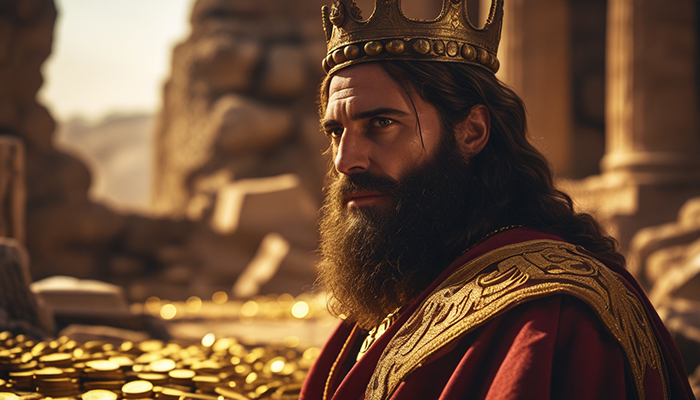
When we hear the phrase “the Midas touch,” we often think of success, wealth, and the ability to turn anything into gold. But behind this popular saying lies a deeper, richer myth — the story of King Midas, a legendary figure from ancient Greek mythology whose wish for endless riches turned into a cautionary tale. Today, we dive into the fascinating world of King Midas, exploring the origins, symbolism, and lasting impact of his golden touch.
King Midas was a real historical figure in Phrygia, an ancient kingdom located in what is now modern-day Turkey. However, the King Midas we know from mythology is a blend of history and fantasy, shaped by Greek storytellers over centuries.
In the myth, Midas was known for his incredible wealth and love for luxury. Yet it was his fateful encounter with the god Dionysus that immortalized him in legend. After Midas performed a kind act by helping the satyr Silenus, Dionysus granted him a single wish. Blinded by greed, Midas wished that everything he touched would turn to gold.
At first, Midas was ecstatic. Twigs, stones, and furniture turned into pure gold at his mere touch. But his joy quickly soured when he realized the devastating consequences. His food and drink became inedible, and, tragically, when he embraced his beloved daughter, she too turned into a golden statue.
Realizing his folly, Midas begged Dionysus to take back the gift. The god agreed, instructing Midas to wash himself in the River Pactolus. As he did, the power left him, and the river’s sands became rich with gold — a mythological explanation for the river’s historical gold deposits.
The tale of King Midas serves as a timeless reminder of the dangers of greed and the pitfalls of unbridled desire. It teaches that wealth without wisdom can lead to ruin, a lesson that still resonates in today’s world of material excess.
The “Midas touch” has also evolved in meaning, now commonly referring to someone who seemingly succeeds in everything they do. Yet, it’s important to remember the original story warns that success without balance can quickly turn into a curse.
King Midas’s legend continues to inspire art, literature, and even modern business jargon. From Shakespeare’s references in *King Henry VIII* to countless adaptations in movies, television shows, and even brand names, Midas remains a symbol of both ambition and caution.
In finance and entrepreneurship, having the “Midas touch” is a coveted reputation — the idea of effortlessly turning ideas into profitable ventures. However, the myth reminds us that success without mindfulness can be hollow.
The story of King Midas is more than just a fable about wealth; it is a profound narrative about human nature, desires, and the true meaning of value. In a world that often glorifies riches and success, remembering the lesson of Midas encourages us to seek balance, wisdom, and gratitude.
Next time you hear about someone with the “Midas touch,” think back to the king whose golden dream nearly cost him everything — and let it inspire a wiser pursuit of true richness in life.

Since the dawn of civilization, tales of eternally burning lamps have fascinated historians, scientists, and spiritual seekers alike. Legends whisper of mysterious lights that glowed without fuel, flames that flickered endlessly in ancient temples and tombs. How did our ancestors seemingly master a technology that even today sparks wonder and debate? Let’s dive deep into the mystery of the ancient everlasting lamps — and explore what secrets they may still hold for us today.
From Egypt to India, Greece, and Rome, historical texts describe lamps that burned for decades, centuries, or even longer without replenishment. Early Christian writers, such as Saint Augustine, recounted stories of lamps found in tombs that had supposedly been burning since ancient times. In one famous account, during the reign of Emperor Justinian (6th century AD), a lamp was discovered in a Roman tomb that had allegedly been alight for over 1,500 years!
The most famous stories come from:
Were these merely myth, exaggeration — or was there a lost technology at play?
Modern historians suggest several explanations for these ancient ever-burning lamps:
Mythology and Embellishment:
Many ancient records blended fact with fiction. The idea of an everlasting flame could symbolize immortality or divine power rather than literal scientific fact.
Advanced Materials:
Some theorists propose that ancient civilizations used incredibly efficient wicks, chemical reactions, or even early forms of battery technology. A combination of pure oils, isolated environments, and special materials might have allowed a flame to burn far longer than expected — though certainly not forever.
3. Sealed Environments:
In airtight tombs, lamps might have been designed to burn slowly with minimal oxygen, giving the illusion of a miraculous long-life flame when opened thousands of years later.
4. Lost Alchemical Knowledge:
Some fringe theorists believe that ancient priests and scholars possessed secret alchemical formulas that modern science has yet to rediscover — including ultra-slow-burning fuels or catalysts unknown today.
Could Ancient Civilizations Have Had Advanced Energy Technologies?
While skeptics dismiss these stories as folklore, alternative historians argue that ancient cultures had access to advanced technologies now lost to time. The existence of the Baghdad Battery — an artifact thought by some to be an early form of an electric cell — lends a sliver of credibility to the idea that ancient energy manipulation was more sophisticated than we assume.
If this is true, the eternally burning lamps could represent not just a curiosity, but a clue to a deeper, forgotten understanding of energy, chemistry, and physics.
Beyond science and speculation, the eternally burning lamp holds powerful symbolic significance across cultures:
Even today, eternal flames burn at memorials around the world — reminders of legacy, sacrifice, and the mysteries that connect us across time.
The truth about the eternally burning lamps may never be fully known. Whether they were the product of misunderstood science, lost technologies, or symbolic storytelling, their allure remains strong.
What is certain is that these stories reflect something deep within the human spirit — a yearning for immortality, illumination, and the mastery of nature’s greatest forces.
Perhaps the real secret of the eternally burning lamps isn’t just about ancient science. It’s about the timeless quest for knowledge, persistence, and the eternal flame of curiosity that burns within us all.
Ако искаш дадена статия винаги да стои на върха на блога ти, WordPress предлага вградена функция за
“sticky post”. Много хора използват плъгини за тази цел, без да осъзнават, че тя вече съществува по
подразбиране.
Вграденият редактор в WordPress има режим за писане без разсейване. Просто кликни на иконката с четката
в горния десен ъгъл. Перфектно решение за фокусирана работа върху съдържание.
Горният десен ъгъл на административния панел крие бутон
“Screen Options”, чрез който можеш да активираш или скриеш различни модули.
Не е нужно да отваряш всяка публикация отделно. С
функцията “Quick Edit” редактираш директно заглавие, дата и категории.
WordPress поддържа кратки кодове, които можеш да използваш
за вграждане на специфичен HTML елемент.
// Example of a custom shortcode in functions.php

                            add_shortcode('custom_btn', function($atts) {

                              return '<button class="powwebs-btn">' . $atts['label'] . '</button>';

                            });
Автоматизирайте графика си за публикации директно от
менюто Publish.
Поставете линк от YouTube или Twitter и той ще се
превърне в интерактивен елемент моментално.
WordPress пази вашата работа дори ако случайно
натиснете Delete.
Малко известен факт е, че WordPress има мощен REST API, който позволява създаване на мобилни приложения
и интеграции със системи от трети страни. Това превръща WP в “headless” CMS платформа.
От административния панел можеш директно да редактираш файловете на темата или плъгините (Appearance
> Theme File Editor). Внимавай – тази функция е мощна, но може да доведе до срив.
WordPress е много повече от това, което виждаш на повърхността. Ако използваш дори част от тези скрити
функции, можеш значително да оптимизираш управлението на сайта си и да спестиш време. Не подценявай
вградените възможности – често те са по-ефективни и надеждни от външни плъгини.

Ефективната SEO стратегия не е просто въпрос на прилагане на тактики, но и на постоянно наблюдение и измерване на резултатите. Това ни помага да разберем какво работи, какво не и как да оптимизираме нашия подход. В тази статия ще разгледаме ключови метрики, които могат да помогнат да измерите успеха на вашата SEO стратегия, включително органичен трафик, CTR (click-through rate), bounce rate и позициониране в SERP (Search Engine Results Page).
Органичният трафик е един от най-важните показатели за успеха на вашата SEO стратегия. Той показва броя на посетителите, които са дошли на вашия сайт чрез органични резултати от търсене. За да го измерите, можете да използвате инструменти като Google Analytics.
Как да го анализираме?
CTR измерва процента на хората, които виждат вашия сайт в резултатите от търсенето и действително кликват върху него. Високият CTR означава, че заглавието и метаописанието ви са атрактивни и релевантни.
Как да го анализираме?
Bounce rate (процентът на отпадане) показва колко посетители напускат сайта ви, без да взаимодействат с него повече от една страница. Високият bounce rate може да сигнализира за проблеми със съдържанието или потребителското изживяване.
Как да го анализираме?
Позицията на вашия сайт в резултатите от търсенето (SERP) е критичен фактор за видимостта ви. Колкото по-високо сте класирани, толкова повече органичен трафик ще получите.
Как да го анализираме?
Заключение:
Измерването на успеха на вашата SEO стратегия изисква редовно наблюдение и анализ на ключови метрики като органичен трафик, CTR, bounce rate и позициониране в SERP. Чрез разбиране и оптимизиране на тези показатели, можете да подобрите видимостта на вашия сайт, да привлечете повече посетители и да увеличите ефективността на вашата SEO стратегия.

В днешния дигитален свят, където конкуренцията е ожесточена, ефективното управление на SEO стратегията е от съществено значение. За щастие, съществуват множество инструменти, които могат да ви помогнат да оптимизирате сайта си и да спестите време и усилия. В тази статия ще разгледаме четири от най-популярните SEO инструменти – Google Analytics, Ahrefs, SEMrush и Screaming Frog – и ще обсъдим как да ги използвате ефективно.
Google Analytics е един от най-мощните инструменти за анализ на уебсайтове, който ви позволява да проследявате и анализирате трафика на вашия сайт. Ето как да го използвате ефективно:
Ahrefs е мощен инструмент за анализ на обратни връзки и проучване на ключови думи. С него можете да подобрите своята off-page SEO стратегия. Ето как да го използвате:
SEMrush е универсален инструмент, който предлага широк спектър от SEO функции, включително проучване на ключови думи, одит на сайта и анализ на конкуренцията. Ето как да го използвате ефективно:
Screaming Frog е инструмент за техническо SEO, който помага да анализирате структурата на сайта и да идентифицирате проблеми. Ето как да го използвате:
Заключение
Използването на правилните SEO инструменти може значително да подобри ефективността на вашата стратегия и да спести време и усилия. Google Analytics, Ahrefs, SEMrush и Screaming Frog предлагат мощни функции, които могат да ви помогнат да оптимизирате сайта си, да подобрите класирането си и да увеличите трафика. Инвестирайте време в изучаването на тези инструменти и ги използвайте като част от вашата цялостна SEO стратегия.